Pages

Showing posts with label food. Show all posts

Sunday, October 12, 2014

First time foragers

Summer has officially ended, and gone are many of the delicious things to be found in the wild. I spent the last two weekends foraging with the Dutchman (Nootje always comes along of course, in a handy backpack) in the sand dunes of The Hague.

First we went to Westduinpark, easily accessible by tram 12 or bus 22 directiom Duindorp. Armed with a children's nature guide, we spot some duindoorn berries, which cluster thickly around spiny branches. They are high in vitamin C, but ridiculously difficult to pick. Maybe we were too late getting to them as well, as the berries were quite soft and tasted overripe. They are extremely sour but with a yummy aftertaste (can imagine it as a marmalade!). I ended up snapping off two small branches to experiment with.

We looked mostly for nettles. The first time I got stung quite a fair bit, so I came armed with leather gloves the second time around! Dutchman remarks that I've become quite the nettle connoisseur, as I only snip the first four or six leaves off a small plant, and they must be of a certain shade of bright young green as well. I read somewhere to pick only the best when you forage to eat, and I am taking this advice rather seriously.
Infusion
I wash the whole bagful of nettles thoroughly, toss to dry and I dehydrate them in the oven at 50 degrees. It takes three batches to dry everything. We've eaten them stirfried and mashed in stamppot but my favourite way is to make an infusion (pour hot water and leave for 6-12 hours, or overnight to simplify things) together with elderberry flowers and rosehips.

Dewberries
The first time, we also discovered dauwbraam or dewberries. They look like blackberries, but are smaller and less sweet. The dewberry plant also tends to creep horizontally rather than arch upwards into a bush shape, like the blackberry plant. Perhaps symbiotically, dewberries grow in between nettles, so there were many untouched berries right under our noses, in the leaves. These I washed, picked out any stems and leaves, and froze in plastic boxes.

Rozebottel or rosehips grow in abundance in the sand dunes. The Dutch variety is more round rather than elongated. The red flesh is mostly bland and very slightly savoury when eaten raw, and most of the fruit is made up of seeds and hairs. I dry these on 50 degrees in the oven until semi dry, before cleaning out the hairs and seeds. Dry them further until they crumble.

Not bad for a first time forage, and i learned the second time around to lay out the goods after foraging to let all the wood lice and other bugs and worms escape before I inadvertently cook or freeze them. Though we couldn't find our coveted elderberries, next summer I'll be prepared early in the season for all kinds of berries, and try my hand at making my own red raspberry leaf tea as well!

Free superfoods for the picking

Wednesday, June 5, 2013

Why McDonald’s is Not Halal

This article was originally published in Aquila Style. 


I grew up in Singapore, where our minority Muslim community enjoys the benefits of the Islamic Religious Authority of Singapore (better known as MUIS), a semi-state institution that governs the collection and disbursement of zakat (social tax), and calculates times of prayer and important dates such as the start and end of Ramadan. Some of their tasks include ensuring that restaurants that serve halal food follow the required rules before being awarded certification, and allowing a round green ‘halal’ sticker on food products that follow the rules of halal (MUIS guidelines on halal food in general and meat in particular).


This green sticker plays a major role in helping everyday Muslims select food. Many Muslims I know will feel ‘was-was’ (doubtful) about eating at a Chinese vegetarian restaurant not because some vegetarian ingredients could be non-halal, but because there is no green sticker since the restaurant did not apply for official certification.

This makes food selection much simpler when in Singapore. But in many other countries without such a certification mechanism, Muslims have to make their own choices and decisions based on their knowledge and conscience. Perhaps because of the familiarity and pervasiveness of fast food corporations, coupled with fears of the unknown, I know many who will seek out McDonald’s familiar golden arches when overseas. Muslims who do so might only eat French fries and a Filet-o-Fish, in trying to avoid non-halal meat. Meanwhile, they forget the variety of real food that could be cooked in perfectly acceptable ways: pasta, rice, potatoes, fish, vegetables, fruits, and so on.

But a green sticker does not necessarily embody halal, and McDonald’s is a prime example of this.

In the Qur’an, food and drink are part of God’s blessings to humankind. The beautiful selection of good things to consume on Earth is a divine sign for us. Three recurrent themes when food and drink are mentioned in the Qur’an are that of i) quantity, ii) quality, and iii) ethical choices. Many aspects of fast food in general, taking McDonald’s as an example, do not follow the guidelines on food and drink as set out in the Qur’an.


Quantity

In the Qur’an, we are given examples of real food like fruits with ‘diverse tastes’ (eg olive, pomegranate) and meat (6:141). Together with another verse which also mentions food and drink (7:31), the concept of extravagance (tus’rifu) in eating is likened to the transgression of God’s laws.

This is because our body has certain divine laws: barring genetic diseases, eating well and exercising will result in health, and eating poorly and sitting around all day will result in diseases. Therefore, eating excessively or extravagantly is disobeying divine laws of physical wellbeing.

There are now laws in more and more countries that force McDonald’s to make their nutritional information available. Now there is no excuse not to know that food from McDonald’s is high in saturated fat, salt and sugar. One medium serving of French fries makes up almost a third of an average person’s daily fat allowance. And a 500ml cup of iced Milo is already a whopping 600 calories of pure sugar.

While many would eat entire meals at McDonald’s, it is possible to minimise the damage by limiting mealtimes at McDonald’s to one or two items at a time, and once every few weeks or months. I myself have not eaten at McDonald’s for more than three years.

Quality

In the Qur’an, halal simply means something that is permitted or lawful. When it comes to food and drink, the word toyyib, meaning good, clean, or pure, is used to describe what kinds of food are lawful (2:172, 20:81). In chapter Al-Maidah (meaning ‘The Table Spread with Food’), we are advised that whatever is toyyib is permitted and should not be made prohibited (5:5, 5:87). Therefore, food which is unclean, impure or bad in any way for our bodies and minds should not be on our to-eat list.

I want to specifically talk about the meats found in McDonald’s: its beef patties, chicken nuggets, and fried fish fillets. While ‘100% beef’ may sound healthy, it actually means that any part of the cow can be included – including tendons and muscle fibre, which are soaked in ammonium hydroxide before being churned and shaped.

Even though this beef is ‘halal’ slaughtered (with yet another certification), the requisite criteria is often ritualistic, only looking at the slaughter stage without consideration of how the animals were raised – which are sometimes curiously similar to non-halal meat production.

Chicken nuggets contain over 20 ingredients, including a range of chemicals and additives that we don’t even know for sure to be safe. Fish fillets may look like real fish, but in fact they are made from a combination of cheap, overfished and tasteless whitefish. To make it taste better, more chemicals are added.

It’s encouraging to see that there are choices for McDonald’s consumers to add more lettuce, tomatoes, corn and other real food to their food choices. However, the meat on the menu is highly processed and tastes nothing like a cut of real meat or fish from the butcher or fishmonger.

Ethical choices

All of our actions have consequences, and the Qur’an encourages us to do good works (23:51) instead of committing abuse (2:60) or oppression (20:81) when eating or drinking. This indicates that the source of our food and drink is important – it must not cause pollution or destruction of natural habitats, and it must not be produced by underpaid or exploited workers.

An invisible aspect of McDonald’s business is its supply chain. When you buy a company’s product, you are voting for their actions, because you contribute to their profits. Several activist groups have popped up over the last decade that highlight problematic points of McDonald’s supply chain: beef from cows raised on former rainforest land in Brazil, and sugar, meat fillers, and oil made from industrial and subsidised monocultured corn from the United States.


Workers at McDonald’s are paid the lowest out of all fast food restaurants in Singapore, at $3.50 to $4.00 an hour. The preference for young workers discriminates against older workers while trapping young people into an underpaid job with no healthcare benefits. People get excited over ‘localised’ items such as the ‘Prosperity Burger’ aimed at Chinese New Year, perhaps forgetting that it discourages people from eating their healthier traditional foods.

What now?

The innocuous green halal sticker on almost every product including vegetables and soy milk encourages simple decision-making. It discourages us from making our own choices, rooted in knowledge and guided by our conscience and easy-to-follow Qur’anic principles.

Halal is not simply the absence of bacon and the presence of ritually-slaughtered meat. Disregarding situations of emergency, halal must encompass the concept of toyyib and the fair and ethical treatment of workers and the Earth.

For those inclined to read labels, ‘organic’, ‘fair trade’ or ‘sustainable’ are arguably more useful labels than the simple ‘halal’ sticker. We can make a start by choosing real food from our own traditional cultures that our grandparents can recognise, cooked by people, and eaten with gratitude.

Sunday, January 13, 2013

Why McDonald's is not halal: Part 2

In Part 1, I suggested three guidelines to eat halal, according to how eating and drinking are spoken about in the Quran.
#1: Halal is moderation.
#2: Halal is good, clean, and pure food.
#3: Halal is local, organic, and/or fair trade.


I find this topic important because debates around fast food and halal only talk about whether the meat was slaughtered in a halal way (by hand, with a knife, with the name of God pronounced on it), or grilled on separate grills from bacon, or whether it is permissible as Muslim minorities to say bismillah before eating any kind of non-pork meat. For an example of this dominant kind of reasoning, see how Jamal Badawi answers a question as to whether fast food is halal.

Hint: The answer starts with 'N' and ends with 'O'.
But now I want to get into the dirty business of showing why McDonald's and other fast food corporations do not follow the Quranic guidelines for halal (lawful) and tayyibat (good, clean, pure). Almost every aspect of global fast food corporations like McDonald's is neither halal nor tayyibat, from the content of their food to the very philosophy that drives their business. 

Violation of #1: McDonald's items are all excessive in calories, saturated fat, salt, and/or sugar.

This is no secret. Even an internal memo once popped up stating that "We can’t really address or defend nutrition. We don’t sell nutrition and people don’t come to McDonald’s for nutrition." A Big Breakfast is already a whopping 560 calories, with barely any precious micronutrients from fruits and vegetables. An average burger is around 300 to 400 calories, with almost half an average adult's saturated fat intake. You could eat all of these fruit and vegetables below for less than 300 calories, no fat and tons of vitamins and minerals (but most people wouldn't).

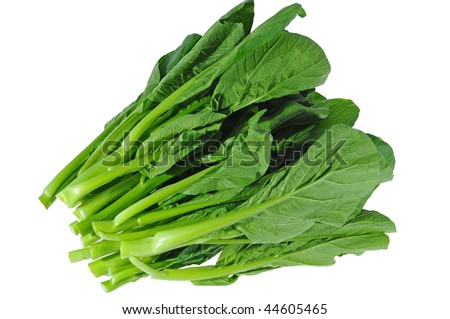
A burger or papaya, carrot, apple, orange, dragonfruit, cucumber, chye sim?

Diabetes, hypertension and heart disease are the top diseases among Singaporean Muslims. These conditions are also very highly correlated to our diet, fitness and weight -- and therefore inarguably preventable. Our body has it's God-given laws. Eating excessive amounts of fat, salt and sugar is a transgression of those laws, resulting in clogged arteries, high blood pressure, low energy, and so on.

In high school I knew a friend who ate McDonald's every day. Check out the documentary Supersize Me by Morgan Spurlock and Food Inc. for the effects of that.

Verdict? An average serving of fast food fails the principle of moderation. However, you could limit the damage to your body by severely limiting fast food to say, half a burger, once a month.

Violation of #2: McDonald's items contain highly-processed foods: high-fructose corn syrup, processed meat with additives, and refined and bleached flour. 

Even if you try to minimise the amount of fat and sugar by adding more lettuce and tomatoes on a McChicken, or having a McGrill without sauce because it "seemed so healthy", the problem lies in the very ingredients and processed nature of these foods. With the exception of lettuce and tomato, everything you see in a burger has been refined in one way or another. (Well maybe fries, but they have never pretended to be healthy.)

High-fructose corn syrup (HFCS) is basically a man-made sweetener which has been linked to obesity. While there is nothing wrong with sweet foods (our bodies do crave something sweet now and then), there is a vast difference between natural sweeteners like raw, organic honey or blackstrap molasses and HFCS. The former contain many trace nutrients and minerals (taking a tablespoon of organic molasses each day can even eliminate menstrual pain), while HFCS is pure sugar, with nothing else of benefit to your body. (Fun fact: a 500ml cup of iced Milo is an insane 600 calories of sugar.)

Processed meat is another set of problems. Compare a cut of meat from the butcher to the meat patty in your Prosperity Burger -- does it look anything alike? Even though McDonald's boasts of using 100% beef in its patties, this could come from any part of the cow, including fat, gristle, offal -- you just don't know what you're eating. Add to this mystery meat a whole list of additives, flavourings, and chemicals, some of which we know are harmful, some of which we don't know yet. The fish used in Filet-O-Fish is a combination of white fish, including a mostly tasteless pollock that requires added chemical flavourings.

The buns used on burgers contain 32 or more ingredients (in comparison, bread only needs flour, yeast, water, and salt). These superfluous ingredients are basically describe additives, preservatives and emulsifiers (those 'E' numbers).

The cells in our body are built from whatever we put in it. In other words, what we eat now becomes our body later. Eating additives and chemicals will produce low-quality cells and our liver spends precious energy to process all these strange chemicals. Eventually, our immune system weakens from not getting enough vitamins and minerals.

Immortal cheeseburger = not halal.

Verdict? A sign that a food is pure, clean and good is that it rots quickly, because other organisms, which instinctively follow God's laws, actually want to eat it. Another sign is if it's something that your grandmother would serve. If your cheeseburger doesn't rot, chances are it's not good to eat. McDonald's meat may be ritually slaughtered, but as you can see this is not the only criteria.

Violation of #3: McDonald's imports its french fries and other frozen products in from USA.

Importing any kind of food from around the world has its environmental costs. While their vegetables and beef could be sourced from closer to home (e.g. Australia, Malaysia), all of its french fries are imported frozen from USA, and processed from the same kind of potato (Russet Burbank). That's why their french fries always taste the same, no matter which outlet you go to in the world.

Violation of #3: McDonald's supply chain is linked to rainforest destruction, animal cruelty, child labour, unsustainable fishing, and reduction in biodiversity. 

Enough said. Why do you want to support a company like this? Every burger you buy is a vote for their destructive global actions. A bite-sized summary on environmental damage and animal cruelty here.

Verdict? These are definitely examples of 'abuse on earth' (2:60), which we have been warned against.

Violation of #3: McDonald's workers are underpaid and work long hours.

While there is no minimum wage anyway in Singapore and no possibility to unionise, McDonald's pays the lowest out of all fast food restaurants at S$3.50 to S$4.00 per hour. They also show a preference for young workers, who can show enthusiasm and energy to their customers. This discriminates against the elderly and traps young people into a precarious, low-paying, part-time job with no extra benefits.

For every McDonald's or fast food chain that opens in a town, a small local independent business does not get the chance to establish itself. The 'specialised' menus in different countries also aims to get people to stop eating healthier traditional foods by creating sad, industrialised substitutes. (See the 2012 ad for the Prosperity Burger.)

More information about worker exploitation and neocolonialism here.

Verdict? Definitely 'oppression of others' (20:81), which we must consider and strive against. The whole concept of industrialised food is to create as much profit in as little time as possible. The care and consideration of humans, animals and our environment is far down the list. This is the opposite of what we are encouraged to do in the Quran.

Source: mcspotlight.org

Now what?

I hope I've convinced you that no matter what legal certification McDonald's or other fast food corporations have, the quantity, quality, and sourcing of its ingredients, together with its relationships to people and nature, show that their food is far from being tayyibat and halal.

You can make changes! Just like the different levels of fasting, we don't have to jump to the third level. We can always start with whatever we are eating, and apply the first rule of moderation. Once we're used to not eating so much, we can start by changing the kinds of food we eat. Finally, try to improve the sources of your food.

As stewards of the earth, we can eat our way to a better life, inshallah!

Saturday, January 12, 2013

Why McDonald's is not halal: Part 1

During my recent interactions with Singaporeans encouraging them to boycott some of the world's largest global corporations linked to the Israeli occupation of Palestine, some protested with the argument that these fast food joints have been given the sticker of halal approval by the MUIS, the Islamic Religious Authority of Singapore. So what right did I have to say that people shouldn't eat food that is state-endorsed halal?

Hard to argue with this.

Most of what I knew about fast food corporations such as McDonald's, I learnt in a sociology class in undergrad. After that class, I was convinced that nothing about their food (and fast food in general) could possibly be halal! I previously wrote about the ethics of eating halal, and in this post I will include two general Quranic guidelines on eating well and halal.

On food consumption in general, this article beautifully summarises the importance of quantity and quality. We should not be extravagant when nourishing ourselves (7:31), even when eating healthy foods (6:141). The root of extravagance or excess (s-r-f) appears 23 times in the Quran, referring almost equally to transgression. Eating or drinking too much connotes the idea of transgressing the limits of your God-given body, or disobeying physical laws. Hence, we come across our first Food Rule:

#1: Halal is moderation

As for the quality of food, we should be eating foods which are tayyibat, or good, clean, and pure (2:172, 20:81). 

Tayyibat foods can be unlawful, as mentioned for Jews (4:160). But for us, whatever that is tayyibat is halal (5:5) and we should not prohibit ourselves from good and pure food (5:87). I therefore argue that whatever that is not good for our bodies and minds is not lawful: halal = tayyibat, the second Food Rule!

#2: Halal is good, clean, and pure food

Eating and drinking is also mentioned together with a warning to not commit abuse on earth (2:60), alluding to the source of our food. Eating good food is mentioned together with not oppressing others (20:81) but instead, doing good works (23:51). This means that we must pay attention to the source of our food. It should not be causing abuse on earth (e.g. air/land/water pollution, rainforest destruction) or the oppression of others (e.g. exploited farmers, underpaid workers).

Organic fruits, vegetables and other products, means that they are grown without the use of synthetic fertilizers (read some of its environmental effects here) or chemical pesticides (here). Organic fertilizers (e.g. compost) and pesticides (e.g. vinegar, lemon juice) could still be used, as they achieve the intended effect without 'abusing' the earth.

Locally-grown means that less fuel is used to fly in products from other countries. I've never eaten a juicy, ripe, sweet, tomato in Singapore. (I recently learnt that many Singaporeans, about to travel, were forewarned of the gastronomic awesomeness of tomatoes grown in temperate climates.) I've also never eaten a juicy, ripe, sweet lychee in Holland. Local organic tastes best and is much cheaper. A quick survey of Cold Storage and other local supermarkets proved to be scarily expensive non-Asian vegetables imported from far away.


Singaporeans, check out Bollywood Veggies and Green Circle for organic, local, Asian vegetables! Look for key words like kampung (lit. village, refers to free-range) chicken or eggs. Better still if you have a banana or guava tree in your garden, or in your relatives' gardens in Malaysia!

Source: Green Circle Eco-Farm online store

Okay, now what about not exploiting humans or animals when trying to find something to eat? There are certain brands (e.g. Dole), products (e.g. tiger prawns, coffee), and provenances (e.g. Israel) that you could look out for. Recently I discovered that a brand of vegetarian products was in fact an Israeli settlement company (hence produced on stolen land and water and all that nasty stuff), and I promptly gave it up.

Here is some information about the conditions in halal farms in Australia (where most of Singapore's beef comes from). Surprisingly, not many people know that stunning is used regularly as part of ritual slaughter -- not every halal farm can do things the way this Texan ranch does. Recently there was a focus on the paltry conditions of live-export sheep to Singapore for Eid ul Adha slaughter. Is the meat from scared, cramped, stressed sheep halal?

Here's a resource about fair trade in Singapore, and fair trade and Islam in general. If you go to Malaysia often, pasar tani or farmer's markets are also good places to start.

Now that you know how to find what is considered respect for nature and other people, we arrive at the third Food Rule! (You can't always find something that fits all 3 criteria, but please always try!)

#3: Halal is local, organic, and/or fair trade

As for the kinds of food, fruit is explicitly stated as provision sent from God (2:22, 14:32, 28:57)! There's a hint if I ever saw one. The colours and growth cycles of fruits are signs of God (6:99, 35:27, 41:47). Aspiring traditionalists can also take a hint and start eating grains, grapes, palmfruit, pomegranates, figs, dates, olives, quails, and seafood. (Rather than conveniently giving a lecture on how we should dress and then heading out for burgers and Coca-cola). Just kidding.

What else is good, pure, and clean? If you have some time, watch this documentary and ponder that question.

And then read Part 2.

Tuesday, July 31, 2012

Ramadan reflection #3: The shortest terawih.

Last week the Dutchman and I were really happy to be invited to break our fast with our friends in Leiden (It gets so lonely in the W-straat you know?) Their parents are Moroccan and along with their other sisters, were still in Morocco for vacation (and Ramadan), because face it, the Ramadan atmosphere here can't begin to compare with Morocco (or even Singapore, sob).

Although the hegemony of a supermarket Albert Heijn is surprisingly tactful of the existence of this holy month. Or maybe it's just because 90% of their evening shifts are covered by youth of Moroccan descent. :)


It was my first iftar Moroccan-style, with dates (of course!) harira soup, popiah/loempia, and hard-boiled eggs. I didn't know it was typical until the Dutchman showed me the Ramadan-journaal on Dutch TV -- they were eating the same things. Haha!

At about 11.30pm we set off to the nearby Al-Hijra mosque, squirreled away in a small road and just like the first European mosque I ever saw in France, it looked just like an apartment from the outside. I still fondly remember that mosque in Bordeaux (and the nice director who let me sit in his chair!), being only 16 and (already) searching for mosques in Bordeaux and in Paris. Which turned out to be educational for my host family as well.


Sitting in the women's section on the ground floor (rumour has it that the men's section is beside and above, but since I never saw it I can't definitively tell you so, haha) at the back, we had what I thought was a couple of minutes before terawih would start. I looked around at the women: one was reading the Quran, some of the older ones were sitting on chairs, and some were giving out murtabak-like pancakes and plastic cups of water.

At that moment, I missed going to the mosque for terawih prayers. Back in Singapore, a few years ago I would faithfully cycle to Al-Istighfar mosque on most nights of Ramadan to endure an hour and a half of sweaty and crowded prayer, makciks telling me to sit closer, cover my feet, pin my headscarf, etc.

But I loved being in a space that I was familiar with, sometimes meeting people I knew (or vaguely knew -- friends of parents or some distant relatives) or sometimes seeing kids dashing across the carpeted floor and falling helter-skelter, unhurt. Even though you had to get there early to get a good spot in the carpeted area within a good distance of a fan (a must in non-airconditioned mosques) or else you'd have to kneel and prostrate on plastic woven tikar (mats) on the hard tiled corridor. Ouch!

I didn't understand most of what was being said in Arabic and Moroccan dialect by a man over the PA system. I turned over to my friend and asked her.

"He's asking for money to build the new mosque. Last night he talked for one and a half hours, I really hope it's not going to be the same tonight," she answered warily.

It was already midnight and it was surreal to be in a mosque! I once stayed overnight for qiyam ul-lail (night prayer) with fellow volunteers in a mosque in Singapore and that felt more like a sleepover than a spiritual experience. It was the same this time around: the novelty of being in a mosque so late at night completely overcame the absurdity of this man talking for one and a half hours, asking for funds.

Finally at 1.00am, after a round of coffee and some gentle coaxing from the imam, this man got off the microphone and the imam started the prayer. He led only 4 raka'at (units of prayer) because it was already late and we left the mosque at 1.30am, passing people on the streets on their way back from Saturday night partying.

For the longest time I ever spent in a mosque, that was the shortest terawih ever!
--
P/S: If you'd like to donate to the construction of a new Al-Hijra Mosque in Leiden, the Netherlands, visit their website!
Dutch donors, you can transfer directly to ABN-AMRO 42.16.50.249 t.n.v.: Stichting Moslimgroep te Leiden.
Overseas donors, IBAN: NL70ABNA0421650249BIC: ABNANL2A or contact me by leaving a comment below if you wish to transfer to a Singaporean bank account.

Saturday, July 28, 2012

Ramadan reflection #2: Physical considerations.

Another of my Ramadan resolutions was to eat better and exercise a bit more beyond riding my bicycle around -- a resolution that is really aimed at post-Ramadan. I agree with the notion that our bodies are entrusted to us, and we have to keep it working as well as possible, and for as long as possible.

Too often this is overlooked, as we traditionally gorge ourselves after sunset. It's not uncommon for people to gain weight during Ramadan, from the combination of a slower metabolism and the making up for missed calories at the end of the day.

In Singapore, the knowledge of maintaining a healthy body is considered 'secular' knowledge, and nothing to do with our relationship with God. Along with environmental-awareness, this is not considered an important topic to teach our children and youth in religious classes. Religious teachers are also not great role models (at least not visually, if you know what I mean).

So keeping in mind a previous analysis about the ethics of halal, my first step towards this resolution was eating less meat.

Besides, we only have about only 5 hours in a day to eat, so what would help with our digestion and getting up for sahur (pre-dawn meal) with enough appetite?

I wish it were this...my mum's
amazing cooking.
But no.
This is what we ate for dinner this week (sahur was muesli with yoghurt and flaxseed everyday. Except one day when we both forgot to set our alarms -- the tragedy!):

Lentils
Redred (near the fork)
Sweet potato
Day 1: Brown rice, curried lentils, boiled beets, white fish with onions and chili

Day 2: Brown rice, stir-fry broccoli, redred (black-eyed peas with anchovies and tomatoes. Thanks Ellen!), peach and plum

Day 3: Wholegrain pasta with tomatoes, basil and chili; leftover redred; red spinach (Amaranthus blitum) soup with sweet potato; rhubarb cake

Day 4: Brown rice, leftovers: redred, spinach soup, lentils, broccoli; pineapple hangop (the one reason to love this country)

Nasi lemak
Sambal with aubergine
Fried rice

Day 5: Nasi lemak: coconut rice, egg, cucumbers, sambal ikan bilis with aubergine; kangkong (Ipomoea aquatica -- yeah I'm a sucker for Latin names!)


Day 6: Fried rice, chye sim (a spinach/mustard green) soup; orange


Day 7: Andijvie stamppot: potatoes, tomatoes, escarole, hard-boiled eggs mashed together and mixed with soy-protein "sausage"; yellow and orange capsicum stew; cherries, grapes

As it turns out, we inadvertently became vegetarian! (The lacto-ovo-pisco kind at least.) Not eating meat speeds up digestion and makes for lighter sleeping -- really important because it seems we are always sleeping soon after eating (think 10.30pm and 3.30am) so that we won't be too tired or feel nauseated (my main challenge) during the next working day.

We've also tried to keep our physical activity as normal as possible. The Dutchman played squash and went for a run (business as usual, this man!), and we took extra walks in these long summer evenings to feed the birds.

We also tried to eat food grown in Holland or as close to it as possible (I know, I know, those Asian vegetables failed the test). Having made these vegetarian efforts for the first week, we took a break this weekend and ate some good meat as guests at the iftars of the generous Indonesian restaurant Salero Minang, and our lovely friends in Leiden today.

Ayam pop and rendang. Yum!
The good news is the weather is warm with cool winds, which shouldn't make running too difficult. On to the next resolution: running right before iftar in this second week, since now I'm adjusting quite well to the length of the fast. I know that if I can do some light exercise in Ramadan, it'll be harder to convince myself to not to so after Ramadan!

P/S: It might seem like an excuse to post pictures of food, but I promise I had good intentions with this post! :)

Friday, April 13, 2012

Coconut milk vs. peanut butter?

I love all my colleagues. I love how, because we come from different backgrounds, we can constantly poke fun at each other and at ourselves.

Here's something written by an extremely talented Dutch-West Papua-economist-islander and all-around funny girl, Olga. (I don't know why she doesn't give up economics for comic writing.)

Coconut milk vs. Peanut butter

As a true economist I would say it depends. There are a number of factors one should consider when choosing between coconut milk and peanut butter. Both have benefits (enjoyment to say the least) and disadvantages (saturated fat). There are also a number of questions that arise from the initial question:
“If you had to choose between coconut milk and peanut butter, which would you choose?” For example, ‘Why would you choose between the two?’ ‘When would you choose between the two?’ and ‘What planet are you from thinking that I could possibly choose between the two?’
I feel that the only way for me to figure out which I would choose is to make a cost-benefit analysis. The cost-benefit analysis that I shall conduct is not in the strict sense a cost-benefit analysis. I will specifically look at a few situational factors, and then draw an overall conclusion from this debate. I must say that there is no evidence to suggest that the two can be looked at in isolation, as they are part of a greater system- the islander system.

The two are not substitutable; choosing between the two is a pickle. Coconut milk is not consumed as is (unless you want to have a heart attack)- it’s always cooked with something. However, coconut water (only from the young coconut mind you) is a refreshing drink. Peanut butter, on the other hand, is a ready when you are type of thing. You can just dip carrot/ celery sticks into the peanut butter and hey presto a snack. For minimum input-maximum output dilemma I would say that peanut butter wins hands down.

I can hear you banter,
“If you think the two are not substitutes; do you consider them complements?”
Well, the two are not strict complements as you can have one without the other. You can have coconut rice and you can have peanut butter on bread. However the two do work well together when you make sate sauce (even if you have to add extra things, like sambal and lime leaves/juice etc). I suggest that the two are weak complements rather than substitutes as they are more often associated with edible awesomeness rather than strictly separate entities.

But why restrict this debate to consumption….
If the two were super heroes though, then it would be different. If I think about it- Coconut Milk would have the power of blinding people with shaves of coconut (as coconut milk is made from straining coconut shaves). Peanut butter would have the power of stickiness- stopping people dead in their tracks with peanut butter. If coconut milk and peanut butter met in battle I think coconut milk would win by default. Blinding someone is more effective way to destroy them then just making them sticky.

In their natural state
I must say in their natural state both are brown, one is hairy and the other is pale slightly bumpy; one a nut the other a legume. With a coconut you see it grow then you watch it fall (hopefully not on your head) a peanut on the other hand grows underground- so the end result is a surprise. Thus making the peanut slightly more intriguing, well at least to me.

If I think about it, it takes more effort to get coconut milk then it does peanut butter. Peanuts just need to be crushed, whereas a coconut needs to be husked, cracked open, scrapped and then strained. The energy taken to make coconut milk makes it more worthwhile. This means that although peanut butter wins when it comes to efficiency, coconut milk trumps peanut butter when it boils down to the desirability of the end result.

To fuel the fire
Both are quite oily so they make for a good source of fuel. The more important question is however, how much energy one can extract from burning the coconut compared to the peanut. An important implication here is that you should have the same weight in each substance prior to burning. Not only is the fuel important, but the carbon imprint. The trade-off here is between the amount of energy produced compared to the carbon imprint. As the coconut is oilier than the peanut it will produce more fuel. More smoke is produced when burning a coconut- thereby making it less environmentally friendly than the peanut. Given that I appreciate the environment more than energy (islander mentality); I would sway the way of the peanut.

Rejuvenation
Looking at the coconut and the peanut you realize that the peanut rejuvenates the soil. It’s used quite often to re-add nutrients to the soil in tropical countries. The process is as such that after growing a crop (and yielding set crop) the soil becomes less nutritious. By default this means that the next crop that is grown in the field will not be as good as the last. So to re-use the field rather than watching it reduce its nutritious value, peanuts are grown in between. This rejuvenates the soil and allows the following season’s crops to do as well as the last. Peanuts win hands down.

Conclusion
The conclusion drawn from this little intriguing question is that it depends per circumstance whether I prefer coconut milk or peanut butter. Looking at all the evidence supplied above peanut butter wins hands down. Its more efficient and effective snack, its more environmentally friendly and its more intriguing as it grows as you have to dig it out. I do however feel that more research needs to be done to statistically prove that peanut butter is actually preferred over coconut milk.

Tuesday, March 13, 2012

The creeping Islamisation of meat and cheese.

Two different countries in Europe. Two food products. Same fear-mongering tactics about Muslims. The objects of these political manoeuvres: meat and cheese.

Focus on the sliced beef
Chisu!

Some background information on this polemic: Sometime in 2010, Uitgesproken EO, an evangelical (read: Christian) broadcasting organisation did a feature on halal food in NL. They filmed interviews of people on the street, asking them questions like "What do you think of the involvement of ritual slaughter (read: Muslim) in your food without your knowledge?" and their shocked responses.

It turns out that Friesland Campina, a major producer of dairy products in NL, is using rennet from halal-butchered calves to make their cheese. Rennet contains several enzymes used to coagulate milk into curds and whey. These enzymes can also be derived from plant or microbial sources. A comprehensive explanation here. 

The reason for their use of halal rennet? One reason is profit -- there's simply more demand for halal lactose for use in halal baby milk products than there is supply -- possibly driven by the 1 million Muslims in NL or the 53 million in Europe.

Muslims who read this might think, that's good news! I don't have to worry about eating Dutch cheese! And these non-Muslims shouldn't worry because they are following the right path, without even making the effort to do so! 

But let's put aside this attitude of Muslim superiority for a minute. Let's consider for a minute that others have other paths, which they consider every bit as legitimate as we do our own. I can understand why they would be freaking out:

1. 'Halal' could refer to unethical slaughter practices. 
Contrary to popular belief, a halal-certified butchery may still stun their animals before slaughter. In an ideal world, we would all ensure that our actions match our words. This means that all livestock and poultry raised for food would be treated well, given enough space to run around, no antibiotics or growth hormones, given food and drink before slaughter, and would be slaughtered by a pious Muslim, with a sharp knife, pronouncing God's name while facing Mecca, without letting the animal see the knife or other animals being slaughtered.

In reality, there are many practices that deviate from this ideal, e.g. using a speaker for God's name, stunning the animal before slaughter, hanging chickens upside down from a conveyor belt where they can all see each other, etc. In summary, a halal certificate may not necessarily include all of the above ideal conditions, and there is no way to know unless you visit the slaughterhouse yourself.

2. Non-religious or non-Muslims don't want their food slaughtered in the name of God.
In an ideal world, Jews, Christians and Muslims all theoretically and practically worship the one and the same God, and so all their food would be good to eat. Remember Qur'an verses 2:173, 5:3, 6:145, 16:115? Food dedicated to something other than God is for us, not permissible. This blogger has the same reasoning about  unknowingly eating halal food (although he says it with a bit more vitriol). I also know a Sikh who avoids halal food for the same reason.

I understand. However, this incident has been used as an example of "creeping shari'a", the Islamisation of Europe, or the slow but steady "economic jihad" of Mozlems all over the world. Calling these food "secretly" halal just compounds fear about Mozlems!

It's interesting what halal food can be equated with. In the words of this Dutch blogger, eating halal food = stoning an 11 year-old girl in Sudan, putting women into blue burqas in Afghanistan, throwing a gay Yemeni off a building (could you possibly add more violent and backward stereotypes to the list?), therefore unknowingly eating halal food = agreeing with the abovementioned cruel practices happening in Muslim-majority countries (Hey, I don't agree with these practices either, and I condemn those who do!).

Over in France, Marine Le Pen from the far-right National Front Party fires up her (non-Muslim) voters with a similar idea of creeping Islamisation of Europe by claiming that all meat in Paris is, in fact, halal. O Marine, je suis venue, j'ai vu, et c'est pas vrai. The only halal meat one can find in Paris is still mostly in the Lebanese and Turkish kebab and shawarma shops, sorry! 

Although I remember that Carrefour (back in 2006), just like Albert Heijn, sells clearly-marked halal certified  meat in its larger supermarkets.

Here you find 100% halal meat! @ Albert Heijn The Hague

Where do we go from here? By all means, mark the meat as halal  so that consumers can make informed choices, but there is no need to be equating halal with shari'a (because shari'a is so much more!) and the restrictive laws and practices of some sorry Muslim-ruled countries. There's also no need to use this halal issue to increase prejudice against immigrants of Moroccan, Algerian, and Turkish origins to Europe.

Makan-makan!

Monday, November 21, 2011

The ethics of 'halal' food.

Let's talk about food. If you know me personally, or have eaten a meal with me, you'll know that I'm a little obsessed with food -- the combinations of colour(!), taste, textures, cooking style and origins. Luckily I have the Dutchman as a partner-in-crime, who was practically vegetarian until I introduced him to the controversy of halal meat.

Like many others, I was taught that halal food encompassed these four basic criteria: anything not from the four forbidden categories mentioned in the Qur'an (2:173, 5:3, 6:145, 16:115). So no 1) dead animals, 2) blood, 3) flesh of swine, and 4) anything dedicated to other than God. Game from the sea is fine (5:96) -- that means all kinds of tasty seafood! This is a simple list of what you can or cannot eat.

In verses 5:1 and 5:3-4, there are more details as to what makes specifically meat halal or not. All herbivorous livestock is lawful. Animals that have been strangled, beaten, or gored to death are prohibited. Animals that fell to their death are prohibited. Animals that were eaten by a wild animal (unless you can slaughter it while it's still alive) are prohibited. Animals slaughtered on idolatrous altars are prohibited. Animals caught by hunting animals trained by humans are also lawful to eat.


Golden retriever hunts ducks.
From 'Tips on Selecting a Hunting Dog'

Eagle catches a rabbit in Kazakhstan

Falcon catches a hare in Kyrgyzstan


This elaboration emphasises the manner of death for the animal, and is related to the above list. The animal whose meat you'll eat has to have died in a respectful, painless, and purposeful way. It also has to die specifically because you want to eat it, not senselessly or because some animal higher up in the food chain was going to have it for dinner. Using hunting animals such as dogs or falcons would also be acceptable because these animals catch the prey for you, and not for themselves. Besides, I believe animals do a better job of it because they submit unconditionally to God, unlike us. Haha.

There is actually no fixed 'Islamic way' of slaughtering, since if there was God would have told us specifically. So in my opinion, what we consider the Islamic way is a series of general guidelines which was developed in the Prophet's time, since details such as sharpening knives are found in various ahadith. These videos from Mercy Slaughter, a ranch in Texas, gives the entire details, and also shows an actual slaughter. You can watch Part 1, Part 2A, Part 2B (Warning: actual slaughter) at Youtube.

But in jurisprudence there are all kinds of other prohibitions, exceptions, and permissions -- I'd be way in over my head to try and enumerate them all. This site lists a selection of other prohibitions and permissions from the different schools of thought.

Some of these prohibitions are related to the importance of the animal. Eating horse and camel meat is discouraged, because in the Arab world they are important for transportation. It reminds me of why cows might have been considered sacred in India -- they are so greatly needed for milk that the bit of meat from killing them outweighs the long-term benefit of having a live animal, according to Marvin Harris in his book 'The Sacred Cow and the Abominable Pig'.

In Sunday school I was taught that insects and other 'disgusting' creatures were also forbidden. Cultural-based value judgments, anyone?

Ant-egg salad in Luang Prabang, Laos
Because of this awesomely complex reasoning for what is divinely, conventionally, and unconventionally considered halal or haraam, I usually say I'm vegetarian if a host asks me what I can or cannot eat. If my host doesn't ask, I eat whatever I consider necessary for respect and feign allergies or a full stomach.

My friend who was raised a Muslim, gave a really fresh take on this. Her mum told her that if a host serves you food, just eat it! Showing respect to a host who has taken the trouble to prepare food for you is worth more than grousing about what you, as a Muslim, can or cannot eat.

Another friend also recounted her time in a rural village in her country, where she was served meat that tasted a little off (I experience this once too -- there are no refrigerators when there is no electricity, people!). The people in the village hardly ever cooked meat and here they had prepared something for their urban guests. What would you do in such a situation? (My solution which is by no means the only one: I ate around the meat.)

Recently, in the spirit of Eid al-Adha, there have been several calls for a more compassionate Eid and a vegetarian Eid. The concerns that these writers have about the intensification and focus on ritualistic halal slaughter and how this quite possibly does not make the meat halal anymore, can also be applied to halal slaughter in general. When animals are mass slaughtered by machines and a loudspeaker saying 'Allahu Akbar', is that meat still halal just because it has a green round sticker in Arabic on it?

In the same vein, huge fast food chains like McDonalds and Burger King also have those green stickers and certification from their country. But when they pay their workers, legal and illegal, such low wages, cook dubious kinds of meat patties that come from meat raised, slaughtered and processed in conditions that are unsafe and unhygienic for both animal and human, is their food still halal by default? Why bemoan the lack of halal McDonald's in the West?