Pages

Showing posts with label media. Show all posts

Saturday, April 23, 2016

Does religion trump race? Yes, at least in Singapore.


One of the biggest problems that Muslim women face today is the need to deconstruct and reconstruct narratives of ourselves in the media. (That’s why Muslimah Media Watch exists, amirite?) A recent interview of Professor Jackie Ying, a Chinese Muslim scientist in Singapore, by a Singaporean Malay language news channel shows that this need can exist just as painfully among Muslims themselves.

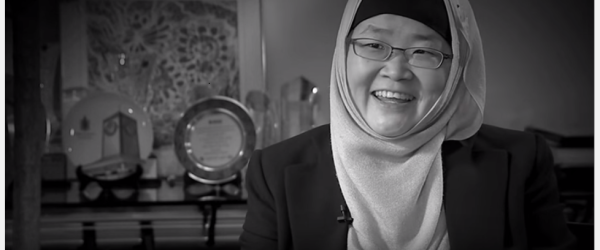
50-year-old Professor Ying is presently the Executive Director of the Institute of Bioengineering and Nanotechnology in Singapore. Born in Taiwan, she came to Singapore at the age of seven to complete her primary and secondary school education. At the age of 15 her family moved to New York, and she attended high school and The Cooper Union to complete a bachelor’s degree in chemical engineering. Afterwards, she obtained her MA and PhD from Princeton University. In 2001, she became one of the youngest full professors at the Massachusetts Institute of Technology (MIT).

The interview was brought to my attention through a blogpost by Singaporean blogger Zaihan, in which he highlighted the problematic ‘entanglement’ of race and religion. (The blog was last accessed on 26 Feb 2016 and seems to be currently unavailable.)
“Due to her choice of converting to Islam about 15 years ago, Professor Ying is somehow now seen as a representative of the Malay/Muslim community. She was asked to comment on issues that this group faces; on how she would change or improve interest in the sciences amongst the youth of the demographic, for example. She was even prodded to share the “kemelayuan”—Malayness, in short—that she sees in herself. It’s so strange because she is Muslim, but not Malay. She was not quite able to answer so many of these queries levelled at her, because she had not lived as a Malay (…)”
In Singapore, just like in Malaysia, ethnicity and religion are deeply intertwined. To be a Malay often means to be Muslim, and Muslim converts are usually expected to adopt Malay practices. Elsewhere in MMW I wrote that “these two terms [Malay and Muslim] are often used interchangeably.” One problem with this false equivalence of terms is that it erases the experiences of Muslims of other ethnicities, like Professor Ying herself. However, this is something that is sometimes reinforced by the ehnic group itself, in this particular case, the Malay community, as highlighted by blogger Zaihan:
“The blatant manner that Berita Harian and local Malay news programmes claim her amazing achievements (she is truly prolific and well-decorated) as a Malay-Muslim point of pride—simply by virtue of her holding the same faith as their target readers—is not only very silly but also insulting to her journey.”
The other problem with equating Malays and Muslims is the discursive erasure of Malays of other religions, even though they make up a very small percentage of the population. One’s religious identity takes precedence over any other identities.

In the half-hour clip, the interviewer asks several questions that assume that Professor Ying somehow would understand what it means to be Malay, just because she converted to Islam. The interviewer poses these questions:
  1. What is the reason behind the low numbers of Malay Muslims participating in science and research?
  2. What more can the Malay Muslim community do to encourage, ensure and produce a group of science practitioners?
  3. Do you see any Malay Muslims [in your institute] who have the potential to be [a Nobel Prize winner]?
Professor Ying works with the local Malay/Muslim community through Yayasan Mendaki, a “self-help” semi-governmental organisation. She mentors young Muslims interested in science by giving them the opportunity of working on research projects in her laboratory. While she could not answer these questions from the perspective of a Malay, she did have insights from the perspective of an educator.

She highlighted the shortcomings of science education, and she said,”I think it’s the same problem for everybody. Students learn science as a fairly dry subject.” Furthermore, she spoke about the emphasis on exams and early streaming, “Doing well academically is different from being able to do research well in the lab. We have too much of a civil service mindset.”

Even though the interviewer’s questions framed her as having to speak for the Singaporean Malay community by virtue of being Muslim, I think she managed to steer the conversation away to – as much as she could – create her own representation. The struggle continues for Muslim women to create their own narratives and resisting those imposed on them.
“I think from being young, we wanted to grow up to be individuals. It was important for me that my parents did not set me in certain pigeonholes. They are very accepting of who I am (…) Of course society is a different story. We have a lot of constraints. But because my parents never set those limitations, I never felt there was something I couldn’t do. I think it’s that: we set our own challenges that makes it possible for us to try different things.”
In Singapore, the conflation of ethnicity and religion erases individual narratives, as Professor Ying highlights here. However, with this interview she has given us an example of how to resist dominant media narratives – an example both media makers and participants can learn from.

Monday, March 14, 2016

Watch: Muslimah spoken word artist sees “saints in the city”

This article was first published on Aquila Style.

--

In this outdoor performance, one half of the British Muslim hip-hop and spoken word duo waxes lyrical about London’s homeless. 


Standing in front of a fence with trains rushing behind her, Sukina Abdul Noor of Poetic Pilgrimage performs a spoken word “Saints in the City” for the RamadanTV 2013 YouTube channel. Through their art and community work, Afro-Carribean converts of Jamaican descent Sukina and her poetic partner Muneera Rashida work to change stereotypes of Muslim women, youth, and Afro-Carribeans. In this performance, Sukina reframes the city’s homeless as being more than what they seem.

Tuesday, March 1, 2016

Muslimahs with disabilities need to you hold the lift door, not gawk at their mobility aids

This article was first published on Muslimah Media Watch.

A Singaporean news channel produced a series of Youtube videos featuring selected athletes with disabilities, or para-athletes. One featured athlete is Aishah Samad, a shooter who had to have all four of her limbs amputated after going into septic shock and contracting gangrene in the hospital on the way home from a trip to China.

In the short 5-minute video, at least a fifth of the entire video focuses solely on footage of Aishah’s mobility aids. The video starts with a drawn-out shot of someone putting a bionic arm on her amputated arm. There is one scene that shows only her prosthetic limbs and not even in relation to the rest of her (01:32). Yet another shot (04:41) focuses on her prosthetic legs, then bionic arms, before zooming out to her upper body sitting on a wheelchair.

This producer had also approached my sister, Nurul, a para-athlete herself, for a filming. Initially, the producer wanted to film my sister’s ‘daily routine’, consisting of showering, eating, getting dressed and most importantly, transferring from her bed to her wheelchair. Presumably, these scenes would be similar to a video done of another local athlete. The producer explained that she found this important for people to understand the challenges of persons with disabilities (PWDs).

This isn’t the first time that a film producer has found that daily activities are utterly fascinating when done by persons with disabilities. Many years ago, my sister had been approached by a another TV channel for filming that would involve scenes like showering and getting dressed. Their favourite request is inevitably to film her transferring from a bed to the wheelchair.

First of all, why the special attention to someone’s daily routine? Does it serve a purpose or is it just a chance to gawk at how someone without arms could possibly cook for herself? Would a feature of able-bodied athletes focus so much on them eating breakfast? (Maybe what they ate for breakfast, but probably not long draw, close-up shots of fingers and forks.) I call this disability porn: there is no purpose to showing these scenes except for the able-bodied to gawk and feel better about themselves.

Second, whether a PWD is willing to reveal such details or present themselves in ways that they are not usually seen (ie without mobility aids) raises questions about personal privacy. Each person – whether able-bodied or not, but especially if not – is entitled to determine their own privacy, comfort levels, and self-presentation.
“Me getting in and out of my wheelchair is like you sitting down and standing up. It’s not a struggle for me because I have figured out a routine that works for me for the past 30 years,” says Nurul.
Fortunately, after some back-and-forth and suggestions on what kinds of scenes could be shown instead in order to give a better picture of the unique challenges of para-athletes, my sister’s video turned out to be very different from that of Aishah. Instead of long shots focusing on her wheels and joystick, there are scenes of her taking notes and stretching, and shots of her various sports equipment.


The mainstream media impacts how we think about certain groups of people. Visual media has an especially strong impact because we absorb what we see without thinking. Nurul points out that the purpose of media that aims to educate or raise awareness about PWDs should aim for getting the public to act better.
“I cannot see how watching what I do in my personal life is going to encourage the public to help me hold lift doors open, tap my [public transport] card, carry my food to my table, not park across access ramps, etc.”
While it’s a step forward to feature para-sports, which receive much less attention than able-bodied sports, it’s important not to reduce para-athletes to mere tokens or shadows of able-bodied ones. Every PWD has their own history, which affects how they see themselves. Some may have born able-bodied, some may have slowly lost motor functions, and some may have had the same challenges since they were little.

Despite these differences, too much emphasis on one’s mobility aids rather than the person herself demonstrates a failure to see the person in all their human complexity and through the lenses of all their identities. For example, what about other aspects of their lives as women, as Muslim women? What are the challenges they face in the mosque? In practising dress codes? These are all equally important perspectives to address
“Public education on disability needs to go beyond ‘overcoming’ medical conditions and daily activities. No two disabled persons ‘struggle’ daily the same way anyway.”

Monday, February 29, 2016

Not Between Her and Allah: Hijab-shaming in Malaysia

This article was first published on Muslimah Media Watch.


Tunku Tun Aminah. Source
Hijab-shaming is a favourite activity for some Muslims, both on-and offline. In fact, just last month I attended a religious class where the teacher spent a good half hour doing just that (I had to stop going for my mental health).

While meeting up with a girlfriend last week, she regaled me with the details of a religious class where the female teacher showed examples of “improper hijab” from a selection of hijabi Instagram users – young women who were obviously oblivious to the use of their photos for such educational purposes.

Social media gives a degree of anonymous bravado that makes it easier than ever to degrade and shame Muslim women for not wearing the hijab – the sixth pillar of Islam. (Oh wait, it isn’t? Funny, it sometimes does seem like it is…)

Last week, Bank Negara Malaysia (the central bank, or BNM) awarded a handful of prestigious scholarships to underprivileged students from around the country. 18-year-old Nur Hajar Asyiqin Abdul Zubir was one of the four to receive the award, after several rigorous rounds of assessment.

Currently studying for her ‘A’ Levels in Negeri Sembilan state, she dreams of studying chemistry at Oxford University in the UK – a “golden opportunity” that this scholarship will be able to fund without worrying her parents, who work as meat suppliers. The youngest of five children in the family, Hajar had scored 9 A+s in her secondary school examinations last year and learned about the scholarship through a motivational programme for underprivileged students in the country.

Source
Malaysia is a multiethnic country, where the indigenous Malays form the majority alongside Chinese and Indian minorities. Instead of pride in her excellent academic results, several Malay men on Facebook chose to criticise the fact that Hajar does not wear a tudung, or hijab.

One man said it was a “pity the aurat is not covered” and that “her father bears the sins”. Another man similarly qualified his congratulatory message with a snarky proclamation that “Allah hates His servants who do not cover” and dismissed the role of Hajar’s own intellectual efforts with the remark “we succeed not because we are clever”. Yet another man even suggested that the hijab should be a requirement for a scholarship awarded for academic excellence.

While one website described this online activity as “chiding”, I disagree: shaming is more accurate. It’s easy to shame Hajar because she is a young girl from a poor family, with no social standing. But it looks like women with a higher status in society are still not exempt. Case in point: a princess from another Malaysian state.

While deriding others is an attempt of the actor to give himself moral or psychological power, it only reveals his own internal crisis of masculinity.

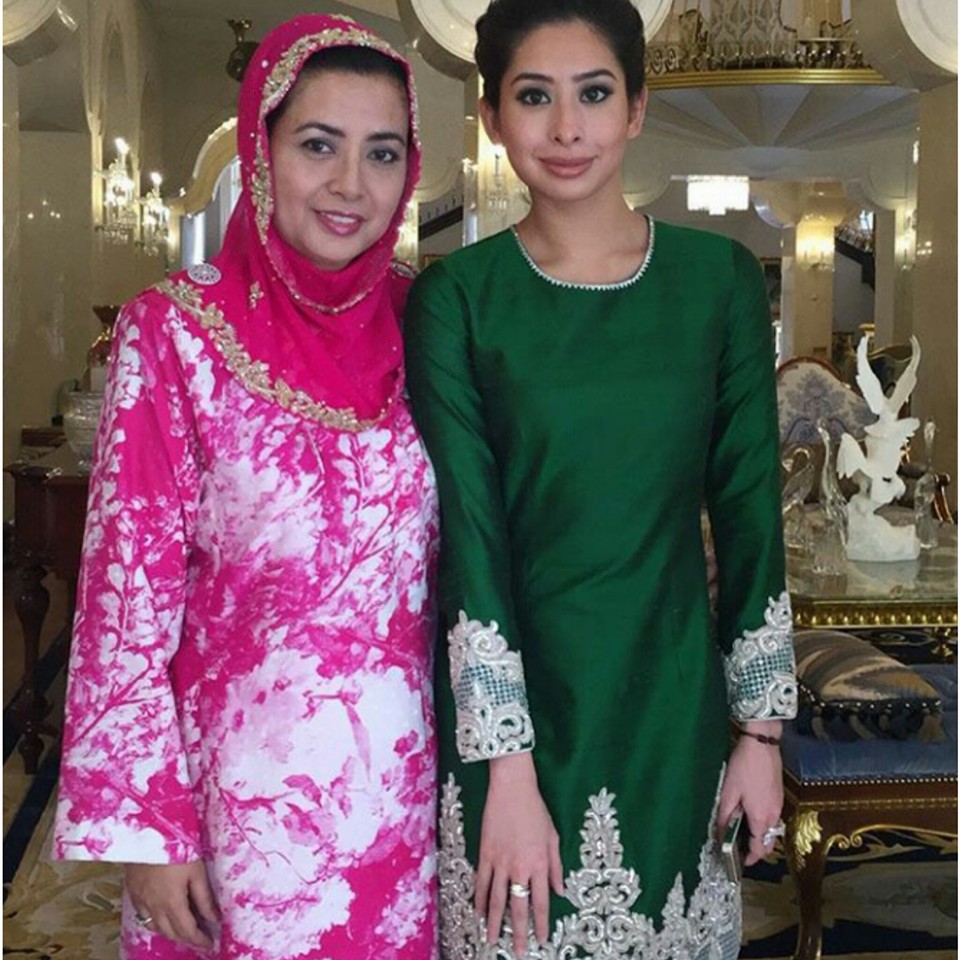
Tunku Tun Aminah Maimunah Iskandariah was recently the target of negative comments on photos posted on Instagram by herself and her brother, Tunku Idris, which shows her without a tudung – her habitual look.

The only daughter among the six children of the Johor sultan and his wife, the fashionable 28-year-old still keeps an Instagram “fashion diary” (@ttaootd), which is heavily monitored for negative comments.

While her brother claims that Tunku Aminah had shut down her Instagram account much earlier and for reasons unrelated to the comments on her lack of hijab, he admits that such comments do “tick [him] off.”

He defends his sister by posting several photos and comments on his account on not being judgemental of how others look. He even vouched for what he knows of his sister’s spirituality, like praying and covering her hair at religious events: “Is that not good enough? Isn’t it between her and Allah?”

It’s such a simple – almost rhetorical – question, yet it is one that is difficult for many of us to answer. These people are shaming Hajar and Tunku for not fitting into their narrow ideas of what it means to be an ideal (Malay) Muslim woman. While deriding others is an attempt of the actor to give himself moral or psychological power, it only reveals his own internal crisis of masculinity.

Wednesday, July 22, 2015

Inspiring the able-bodied, one day at a time.

Meet Siti, a heroine rising from the ashes of mainstream media representation of people with disabilities (PWD).

Siti suffers from ignorance around her medical condition which has a scary sounding scientific name. Thanks to her various mobility aids however, she is able to overcome public pity and discomfort to gain dignity and autonomy.

With the help and assistance of her caregivers, she triumphs over her limitations and accomplishes essential everyday tasks such as showering, getting dressed, eating and going to the toilet.

Because you think she probably also has mental limitations because she does not speak, look or act like you, she often suffers from patronising treatment. She fondly recalls one fancy dinner where the only thing a Very Important Man said to her, speaking very slowly and loudly: "The food OK for you?"

Everything she does is special and/or inspiring: from abovementioned daily tasks to getting any level of education or having a family. More inspiring is if she can travel from point A to point B by herself: not many possess the courage to find a stranger to press the lift button that is either too high or blocked by a trash can.

Few are able to handle the adversity of being stuck in the rain waiting for someone to pass by and pick up her dropped phone. Even rarer still are those who can keep their patience when a car blocks the ramp from her house to the road.

But Siti pushes through, day by day.

Most inspiring of all is if she is better than you in anything -- art, science, sport, procreation or religion -- because you think that anyone who has the use of their limbs should be able to be better at everything that PWD can do. This is Siti's biggest obstacle: eradicating the belief that she can only reach her full human potential if she was able-bodied.

When she's not busy being patronised, she occupies her time with helping able-bodied people feel better about themselves. She stops them from whining about their shitty lives because at least they can walk/see/drive/go to the toilet by themselves. She also inspires them to do more with their lives because of aforementioned abilities.

She helps out the well-meaning ones the most. She inspires them to create an excessively humble but uselessly hollow self-image by calling themselves things like "more disabled than the disabled". She helps them feel generous by thinking they can't even do what PWD can.

Most importantly, she helps them feel altruistic because they can raise money by dancing and singing, instead of dealing with the sticky and difficult tasks of fighting for social welfare, making public and private spaces accessible, or creating safe and decent paying jobs beyond peddling small goods on the street.

When asked about the most important thing others should know about her, she shrugged and said simply: 
"If able-bodied people can be seen as complex human beings, be portrayed with dignity, and not have mobility aids overshadow their actual talents, we can do it too! Never give up!"

--

This is satire, obviously, written from the limited perspective of an able bodied person who grew up with a sister with a disability. "Siti" is a generic Malay name, not unlike Jane Doe.